
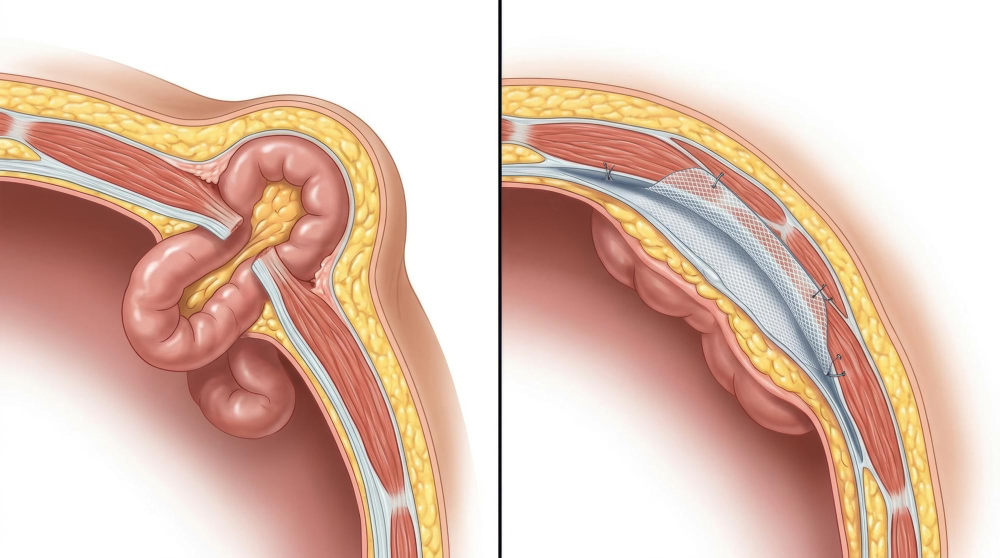
What Is Laparoscopic Hernia Repair?
Laparoscopic hernia repair is a type of minimally invasive hernia surgery. It uses small cuts and a camera to fix a hernia. A hernia happens when tissue pushes through a weak spot in the muscle. Instead of one large cut, the surgeon makes a few tiny ones. Through these, special tools and a camera are used. As a result, many people choose this option for its gentle approach. Laparoscopic hernia repair is now common in many hospitals, including those in large cities and small towns. According to the CDC, this method is safe and effective for most patients.
Key Benefits of Laparoscopic Hernia Repair
Laparoscopic surgery benefits many patients. Compared to open surgery, it offers several advantages. For example, people often experience less pain after surgery. Additionally, the scars are much smaller. Here are some key benefits:
Because of these benefits, many doctors recommend minimally invasive hernia surgery. In many places, such as urban medical centers, this method is widely available.
The Recovery Process After Laparoscopic Hernia Repair
After laparoscopic hernia repair, recovery is usually quicker than with open surgery. Most people go home the same day. However, some may stay overnight for observation. During the first few days, you may feel sore or tired. Even so, most people can walk and move around soon after surgery. The hernia repair recovery time often ranges from one to two weeks for light activities. For heavy lifting or sports, you may need to wait longer. Always follow your surgeon’s advice for the best results.
Tips for a Smooth Recovery
To help your body heal, it is important to take care of yourself. Here are some tips for a smooth recovery:
Sometimes, your surgeon may give you special instructions. For example, you might need to wear a support belt. Always ask questions if you are unsure about your care.
Potential Risks and When to Contact Your Surgeon
Although laparoscopic hernia repair is safe, all surgeries have some risks. Problems are rare, but it is important to know the warning signs. For instance, you should contact your surgeon if you notice:
If you have any of these symptoms, seek medical help right away. According to the World Health Organization, early treatment of problems can prevent serious issues. While most people recover well, staying alert helps ensure a safe healing process.